Asset managers think in portfolios,
not individual properties
The platform originally focused on individual properties. But asset managers operate at a portfolio level — their goal is to maximize ROI and cash flow across multiple assets simultaneously.
Without a portfolio view, users had no way to assess overall performance or know where to act first. Every decision required individually analyzing each property, increasing cognitive load and slowing down the workflow significantly.

Before: property list with no portfolio context
Design for decisions, not just data
The hypothesis: shifting to a portfolio-centric view with actionable insights would enable faster, more confident decisions and drive better portfolio performance overall.
"A portfolio view only creates value if it tells users what to do next — not just where things stand."
Constraints shaped the approach early. Limited user data and tight timelines meant we couldn't rely on collected evidence. Instead, we built a prototype grounded in assumptions and prioritized rapid testing to validate our direction quickly.
Narrowing from complexity to clarity
Early concepts explored multiple tabs across finance, energy, and construction — a natural starting point for a platform managing multi-dimensional assets. But presenting all dimensions at once added cognitive weight and relied on incomplete data sources.
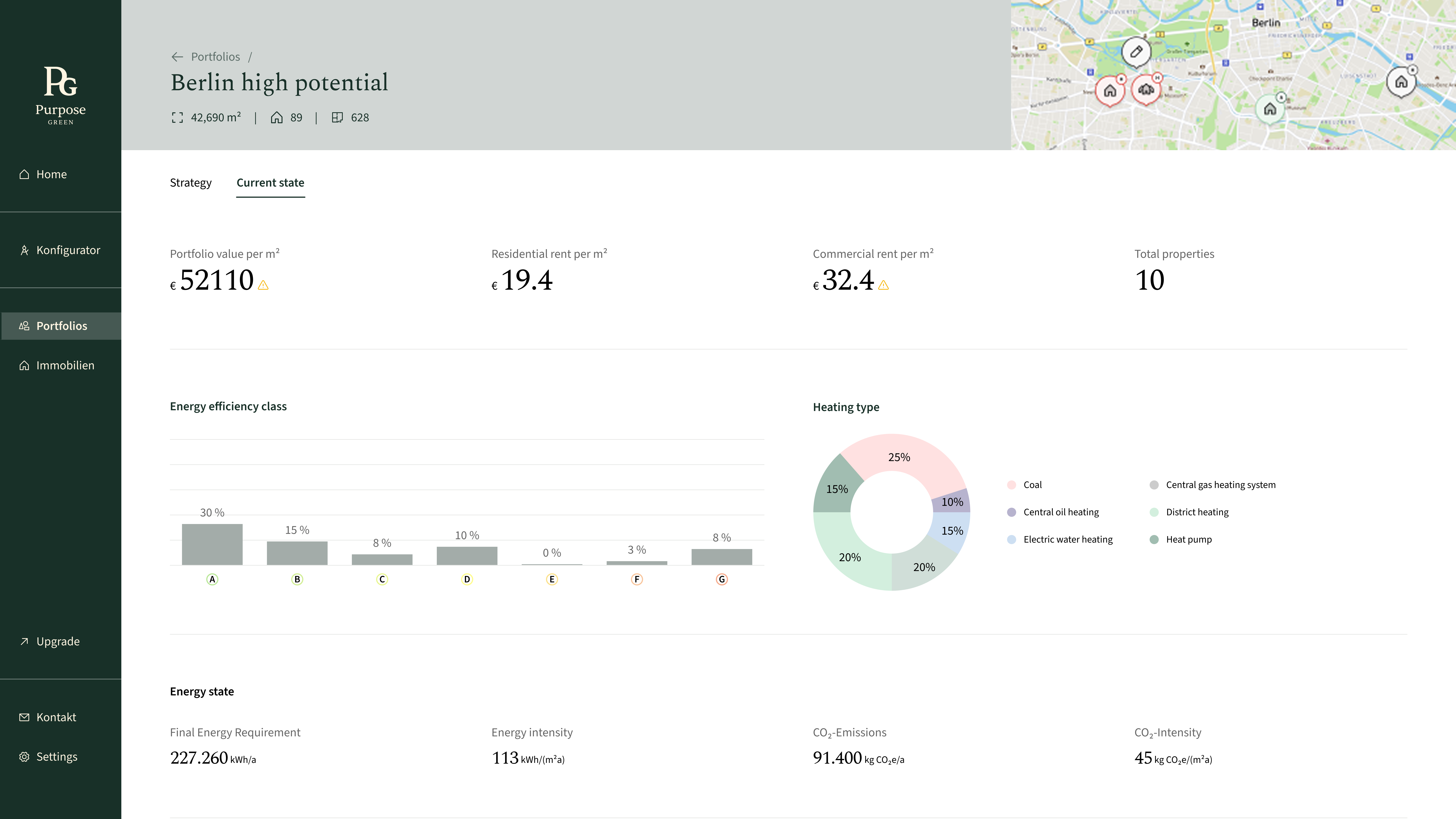
We narrowed scope to the two areas that mattered most and were best supported by available data: Current State (portfolio health) and Strategy (actionable roadmap).

Portal architecture — portfolio integration mapped in FigJam
Four layers of portfolio intelligence
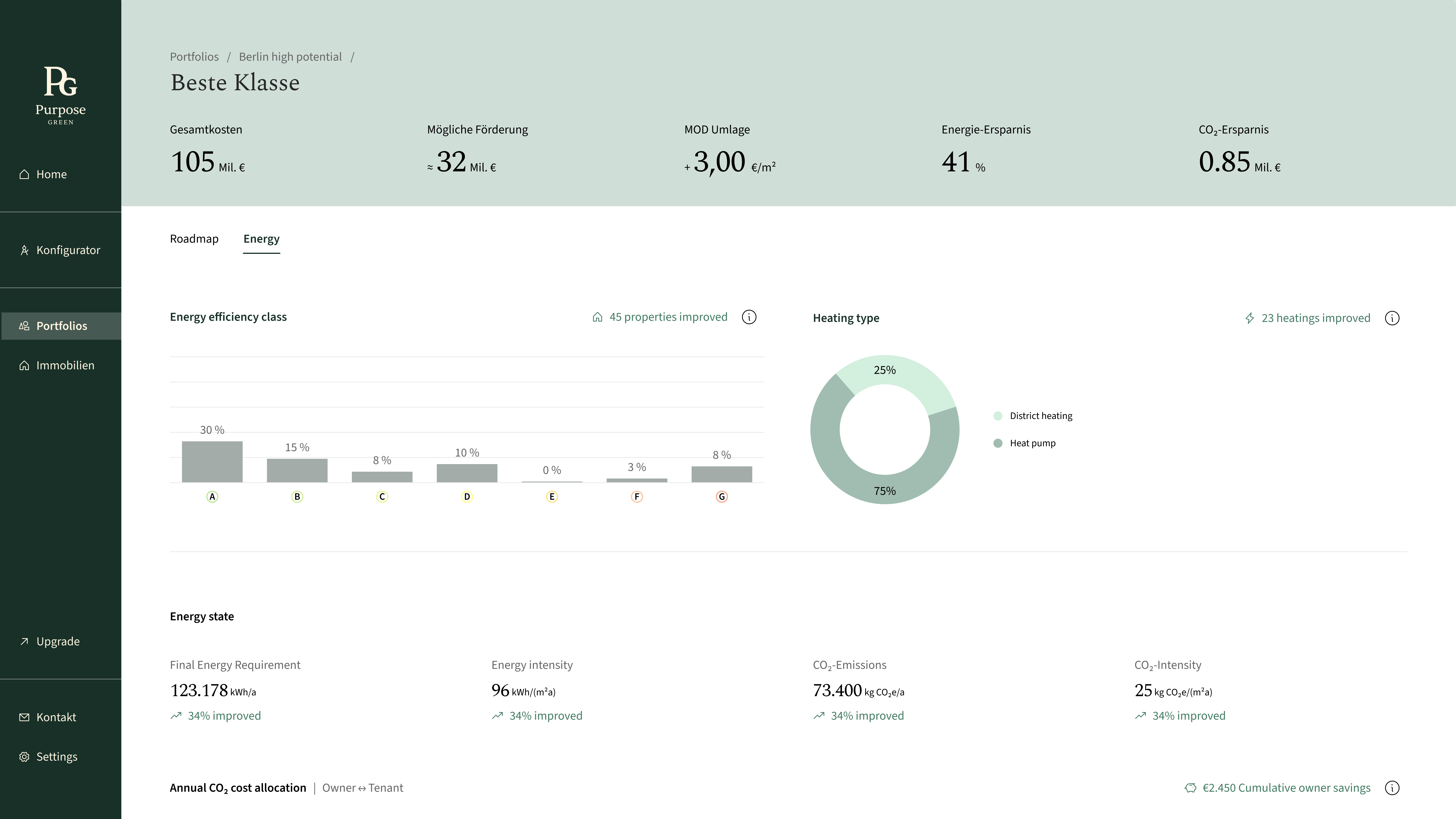
From raw data to actionable intelligence

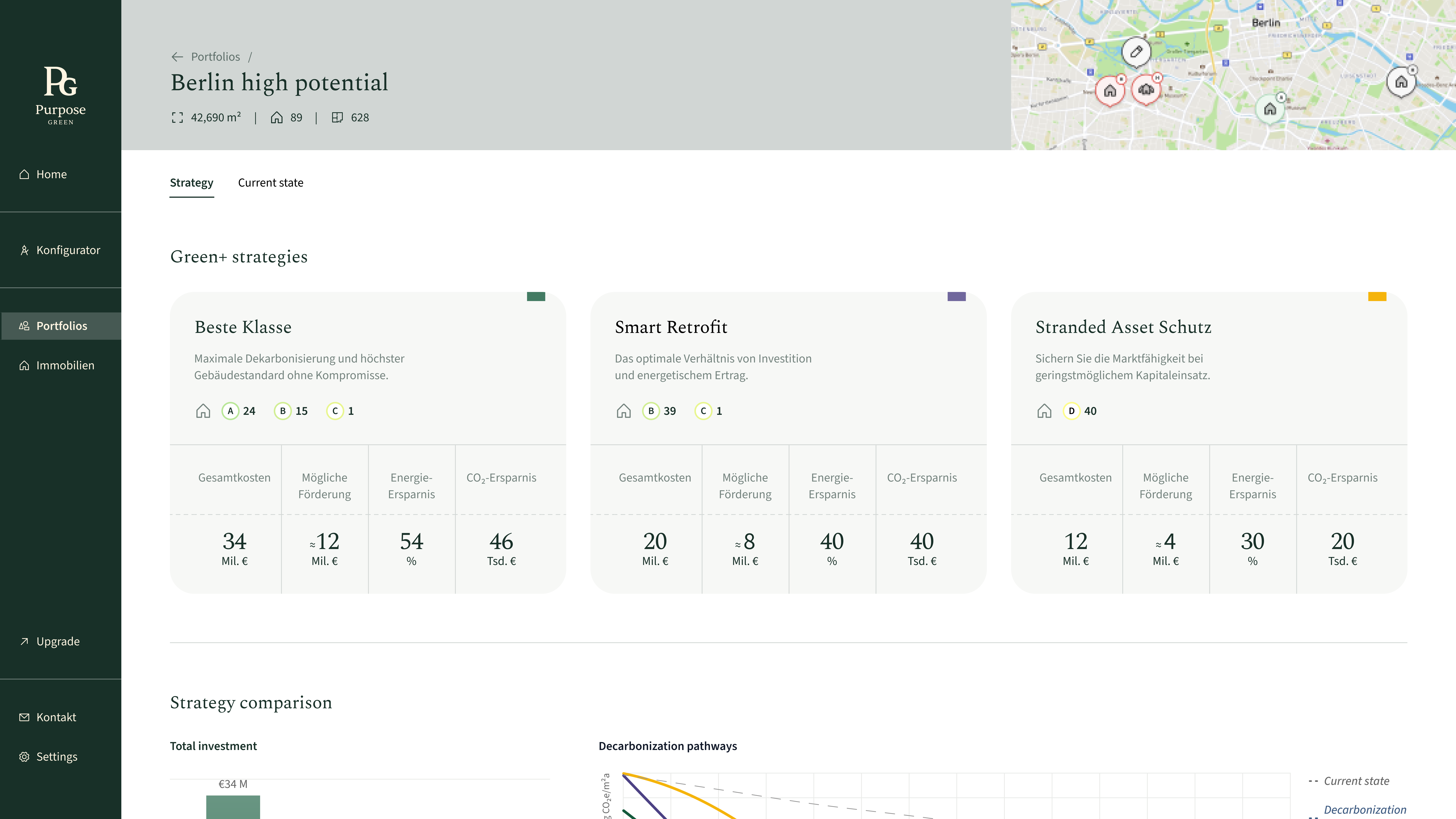
Portfolio strategy — three scenario approaches with investment and decarbonization comparison
A clearer path to better decisions
- Simple list of individual properties
- No cross-portfolio view or health signals
- No prioritization — every property felt equal
- Decisions required manual analysis of each asset
- High cognitive load, fragmented workflow
- Portfolio health overview with KPIs at a glance
- Strategy scenarios showing clear trade-offs
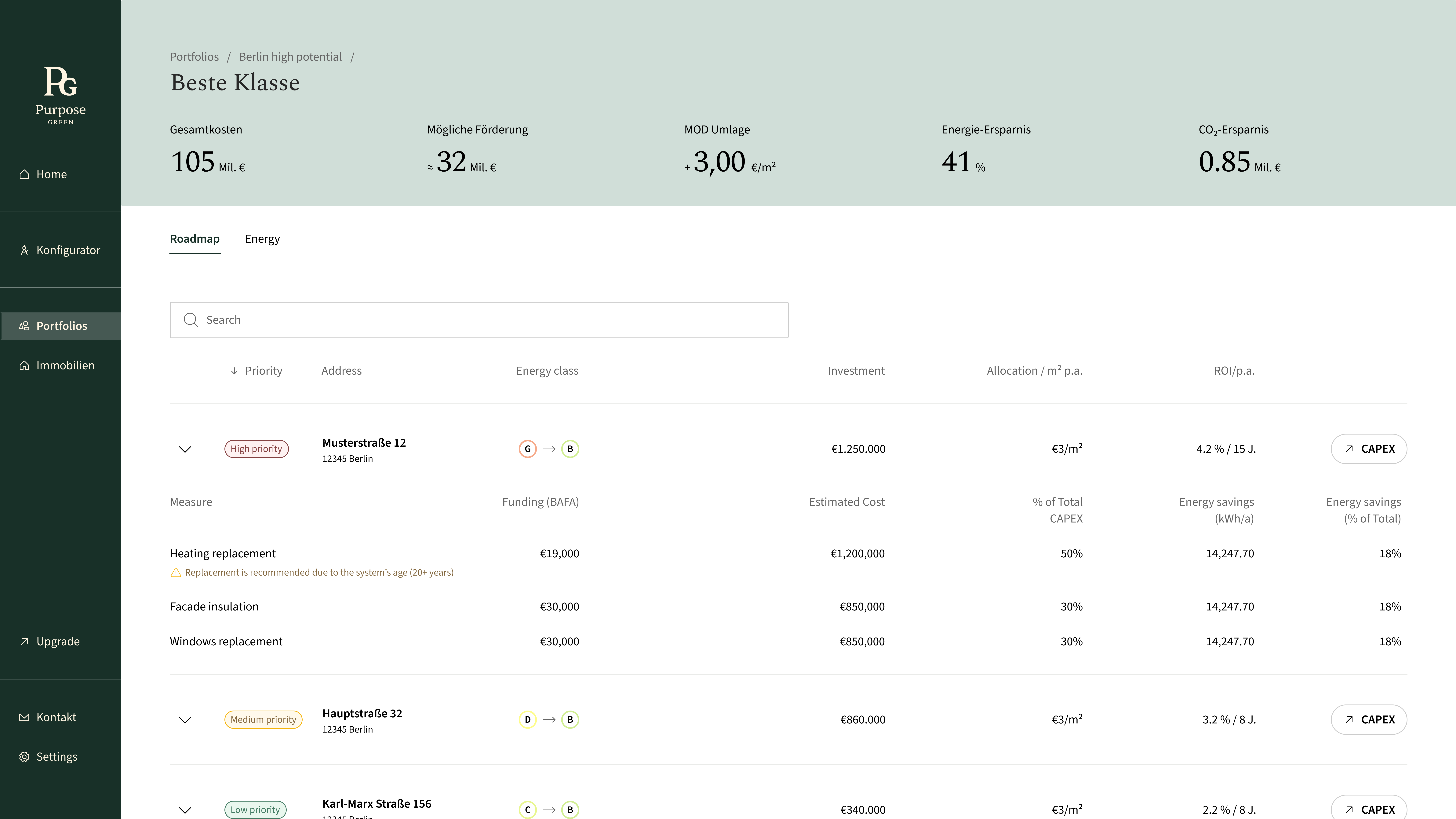
- Actionable roadmap with ranked properties
- Configurator integration for per-property tuning
- Decisions grounded in prioritization, not raw data
Tested with real asset managers
The portfolio and strategy features were validated through 8 user testing sessions with asset managers. The roadmap/strategy view consistently emerged as the most valued feature — users appreciated having a clear starting point rather than being presented with all data simultaneously.

User testing sessions documented in Notion — portfolio insights tracking
Prioritization over data
Portfolio-level design adds most value through guidance and ranked action — not by surfacing more raw data. Users trusted the system more when it told them where to start.
Focused scope enables velocity
Narrowing to Current State and Strategy — rather than building all dimensions at once — allowed rapid prototyping and validation under real data constraints.
What's next
Future iterations will extend to commercial properties, refine scenario customization, and deepen the connection between strategy selection and configurator output.